|
The remarkable Story of G-AFJB 
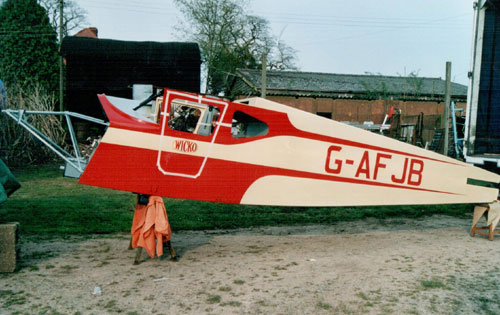
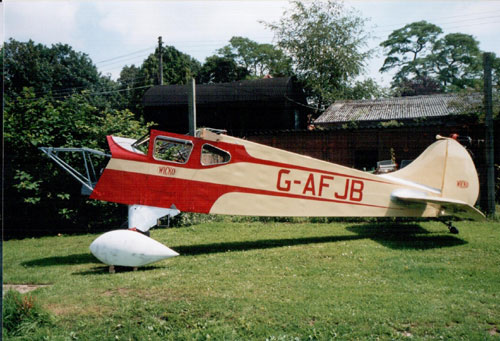
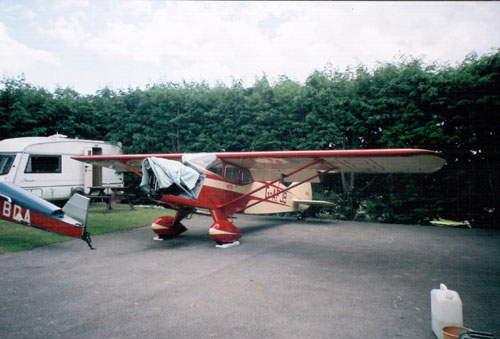
Over a period of years, Foster Wikner Wicko G-AFJB, one of the two aircraft with which the Southport Aero Club started flying, has been brought back to life by Joe Dible and Ron Souch. It has been completely rebuilt and painted in its original colours as delivered. This magnificant effort has saved an historic aircraft, the only remaining one of the eleven built pre-war. It is expected to fly in the summer of 2005. After this costly and perfect restoration, it looks in far better shape than when we subjected it to rather a hard life on the beach in the 1950's. This aircraft has had a most remarkable life which started even before we owned it and has continued long after it was our pride and joy all those years ago. Ready to Fly again. May 2005
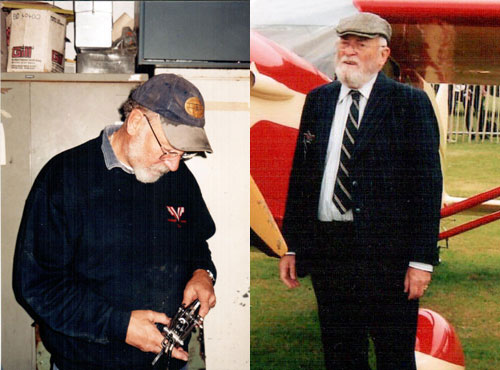
Ron wrestles with the Bendix brake system Rejected in favor of
modern hydraulic system..
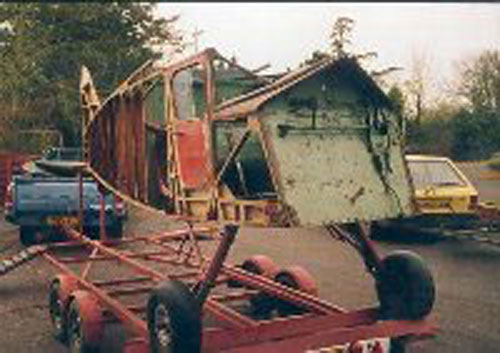
Fuslage mounted on trailer at Berkswell Forge leaving for Aero Antiques workshop Southampton.
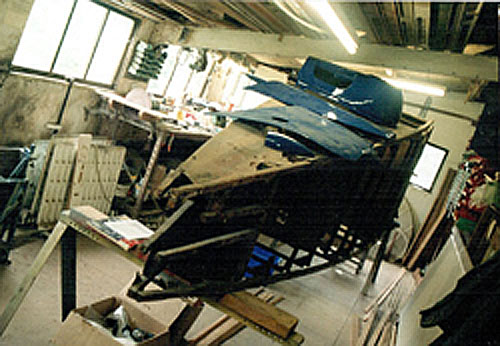
Rear fuselage on trestle in workshop.
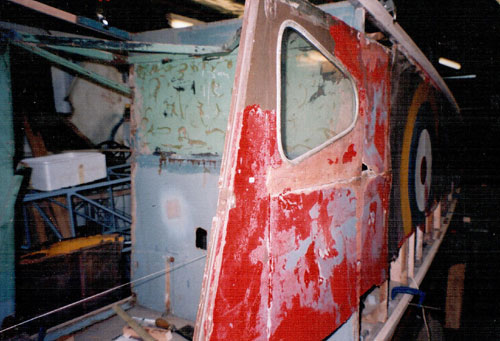
Front fuselage port side partially stripped. Showing cabin rear bulkhead..Note starboard side removed . Only about 2% of the original wood work was restorable so essentially it was of a job of making up new bits using the old wood as a pattern.
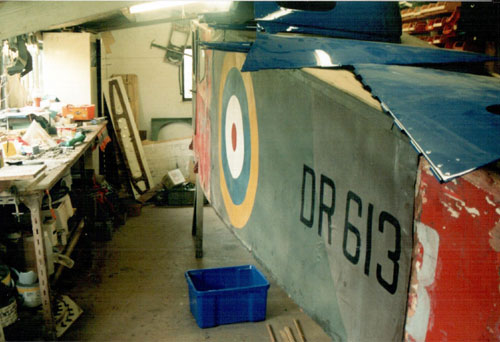
Rear fuselage showing WWII serial over original civilian registration. Wartime scheme applied for static display at Berkswell Forge.
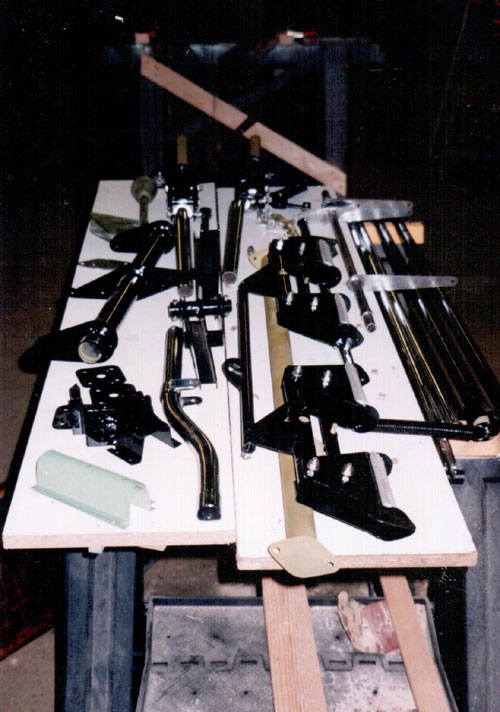
Layout of restored control components, painted, new bearings and chromed as appropriate.
New aluminium fuel tank awaits fitting to fuselage. Old steel tank had the end cut off for some obscure "health and safety" requirement. If it was to rid the tank of any residual fuel bits or vapors then the fact that it was cut off using a blow torch is mind boggling! A dramatic weight saving achieved with new tank.
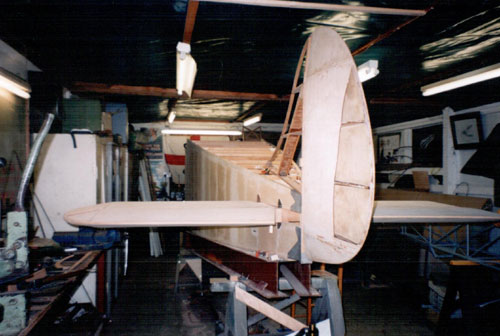
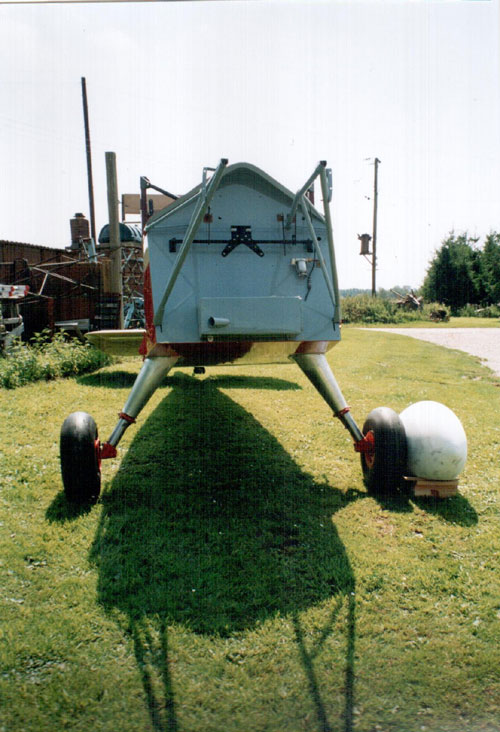
Rear fuselage clearly showing tail plane slot.Note bulkhead control runs for both rudder and elevator cables and, just discernable, the double longerons. Substantial king post and beefed up area at rear end for steerable tail wheel refitted where skid was originally positioned. The castoring "Maggie" tail wheel fitted near to the tail plane L.E. and installed at Boscomembe Down to satisfy ATC who frowned on having their precious hard standing filed away has been removed.
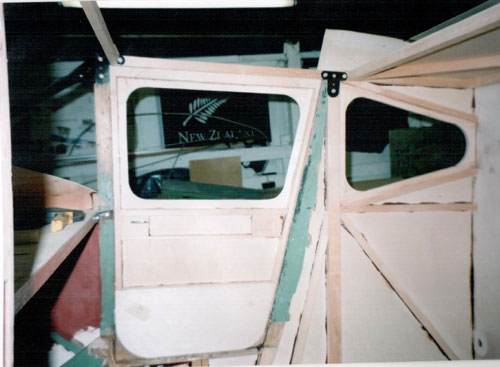
Starboard side door and rear cabin window. Top longeron with forward metal wing to engine mount tube.
Tail plane offered up with elevators in position. Fuselage sides now covered.
Fin now in position with temporary rudder which was recovered due to ply not taking to being asked to bend in two directions at once and thus parting company with the ribs beneath!
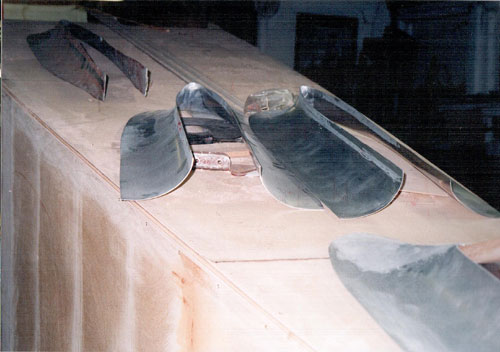
The re-manufactured aluminium tail plain and fan fairings. Well corroded and crumbling fin fairing in front that had been reduced to the consistency of "Alker Seltzer" tablet. Crumbly!
Looking forward from the rear. Bill working on fitting starboard cabin door.
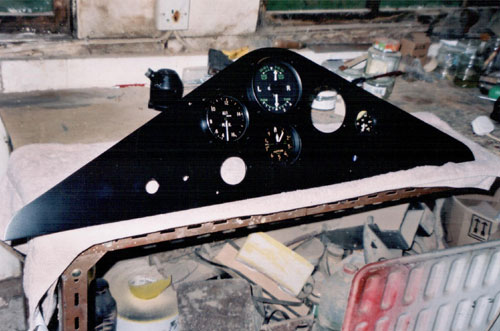
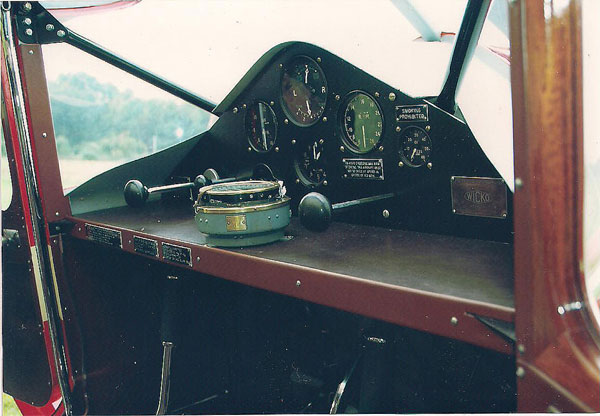
The instrument panel as currently fitted. From left to right. Airspeed indicator reading in MPH, Reid and Seigrist turn and slip with altimeter below, oil pressure on right. The original cockpit had an oil temperature gauge fitted which was not fitted in the restoration. The two large back knob topped plungers are the throttles. Just visible on the port side and hiding behind the P type compass is the mixture control. Just visible between the chromed sticks is the flap-actuating lever. Various cockpit placards are also noteworthy as is the original makers name plate and serial number in brass on right.
|